Bare and booted hooves get excellent traction and maximum shock
absorption. This also means they suffer fewer hoof pathologies and soft tissue injuries. A shod hoof
on dirt gets the same amount of concussion as a barefoot on concrete!!! Metal shoes maximize concussion
can induce leg strain and injuries.
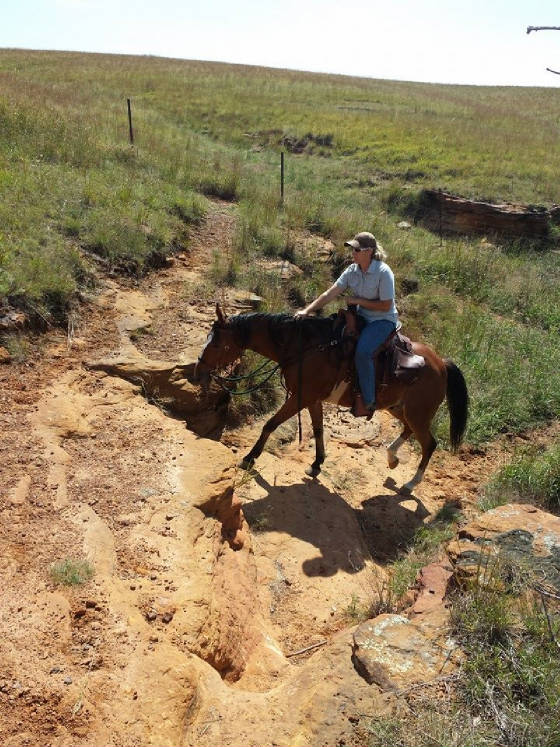
Barefoot horses are capable of performing any task, from polo, racing and a roping cows that their shod counterparts
can do. Traditional shoes physically interfere with the ability to feel where the hoof is, while bare hooves can feel
every step. Barefoot horses not only are healthier, but safer to ride. When turning a barrel or going down a steep hill,
stumbling is not an option. Barefoot horses can feel a bad foot placement and adjust their stride and avoid bruises. The benefits
are clear. The hard part is bucking tradition.
I often hear the arguments for metal shoes. "Look how many horses are shod and aren't lame". But how sound
are they really? Most shod horses develop long hoof capsuleswith soft tissue injuries and navicular syndrome in what
should be the prime of their life. Or "My horse can't go without shoes because hissoles are so thin".
Often the shoeing is what contributes to thin soles. Many horses that are thriving with natural trims had their shoes removed
as last ditch efforts before euthanasia! The feet that "couldn't" go bare not only did, but wound up sounder than
with shoes.
No horse
can't go without metal shoes. It is the owner or trainer that can't. It may be a matter of convenience,
a lack of willingness to give up the tradition, too impatient to put on the needed hoof boots. For them,
metal shoes are the perfect solution. If a tree falls in the forest, and no one is around to hear it, does it make a
sound? If the horse tip-toes on thrushy frogs, but never limps, is he really unsound? YES! For the owners that
are willing to take two minutes to apply hoof boots, their horses will benefit. Some horses may be more challenged.
Old horses shod their whole lives or those who have had severe, chronic lameness may always need boots to work, but the overall
hoof quality will improve without metal shoes. Young horses that get plenty of exercise and have never seen a horseshoe may
never even need boots.
This site is not intended as a "how to", but to answer "why?" for those
seeking answers about doing what's best for their horse in terms of hoof care. I'm not going to tell you
how to trim a hoof here, but I offer information on why your horse should be barefoot. Diet
and exercise play key roles in affecting hoof health, regardless of how the hooves are trimmed or shod. The
horse owner has been revealed as having more impact than the vet and farrier in horse health. After all,
the owner/handler has a day to day impact and it is their responsibility to keep up on the latest research to be able
to make informed decisions. Keep checking back with my blog and Tips page for the latest in equine nutrition and hoof
care research updates.